

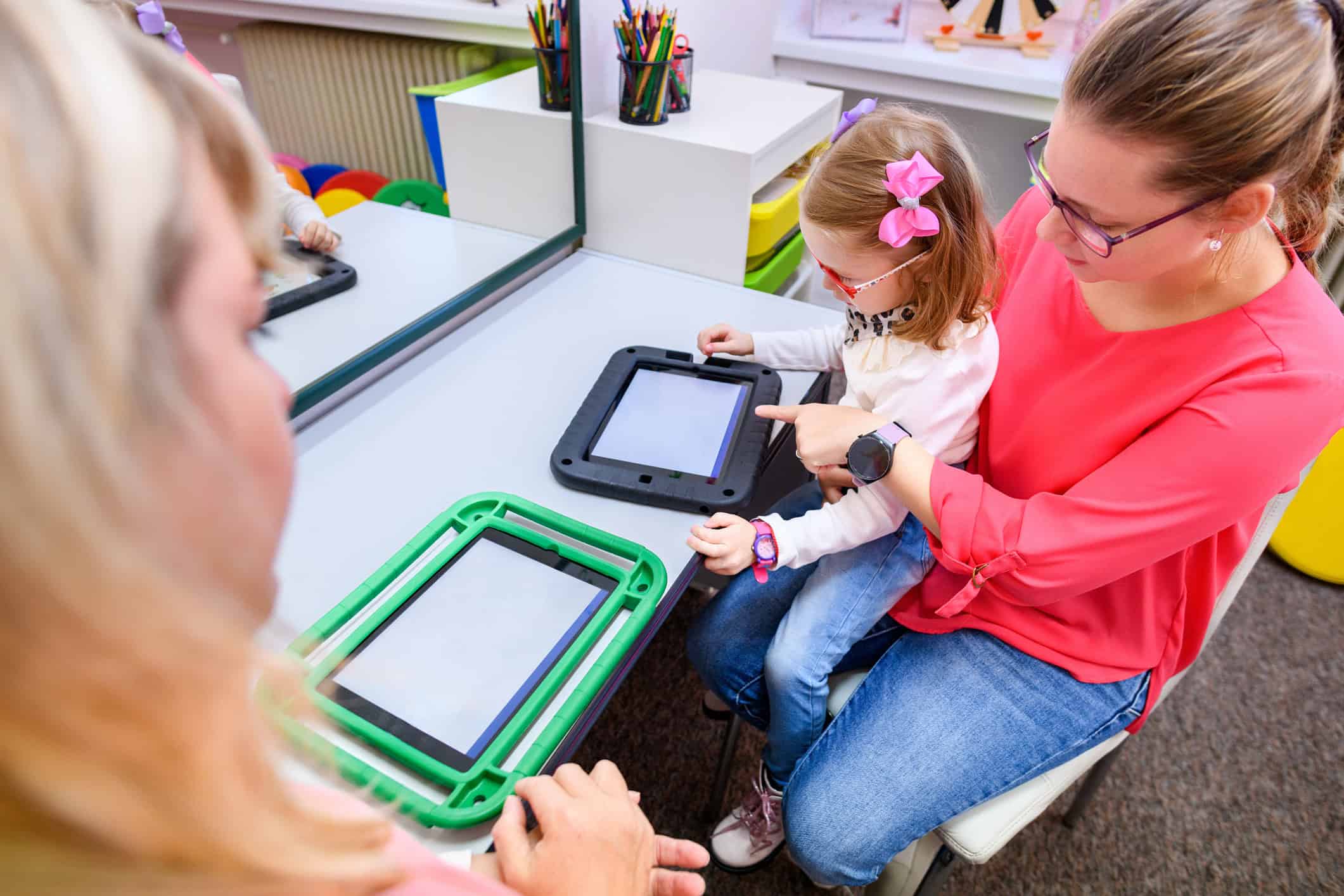
Every child deserves to have their own voice. But for some children, spoken language does not come easily or consistently. If your child has difficulty speaking due to developmental delays, neurological conditions, or a speech disorder, Augmentative and Alternative Communication (AAC) may help.
AAC includes a wide range of tools and strategies that support communication when speech is limited or difficult, helping your child communicate and be understood. Understanding how AAC works and the range of options available is an important first step in making informed decisions about what can best support your child’s communication needs.
What Are AAC Devices?
AAC refers to methods of communication that supplement or replace spoken language. AAC encompasses a wide range of ways your child can share ideas, needs, and feelings when speech is limited or difficult. This can include gestures, facial expressions, pictures, symbols, and communication boards, as well as high-tech electronic devices that generate speech.
These speech-generating devices are often what people are referring to when they talk about AAC devices. A child can use AAC devices for many reasons and at many stages, and they can be used temporarily or long term, depending on their needs. For example, your child can use them alongside spoken language, or rely on it as their primary way to communicate.
When introduced thoughtfully, AAC devices support language development by reducing pressure, increasing opportunities to communicate, and helping your child participate more fully in everyday interactions.
Who Can Benefit From AAC Devices?
AAC devices can benefit individuals with a wide range of communication challenges, including children who are non-verbal, children who need extra support developing speech, as well as teens and adults with complex communication needs. AAC may help individuals who experience:
- Autism spectrum disorder
- Childhood apraxia of speech or other motor-related speech disorders
- Cerebral palsy or other neurological conditions that affect speech production
- Genetic conditions that result in complex communication needs
- Stroke, brain injury, or other acquired communication challenges
- Developmental delays
- Hearing impairments
How AAC Supports Language Development
Language develops through meaningful interaction. By giving your child a reliable way to communicate, AAC creates more opportunities for your child to use and understand language, and engage with others throughout the day.
AAC can support language development by:
- Reducing frustration and anxiety related to communication breakdowns
- Supporting expressive language by giving your child access to words and symbols
- Helping your child understand language by pairing words with actions, objects, and routines they experience throughout the day
- Making social interaction with peers, family members, and teachers easier and more rewarding
Types of AAC Devices and Systems
AAC devices generally fall into two broad categories: low-tech and high-tech. The right option depends on a child’s motor abilities, language skills, learning style, and communication goals.
Low-Tech AAC Options
Low-tech AAC does not require electronics or batteries. These systems are often used as a starting point, as a backup to high-tech devices, or as a long-term solution for some children. Examples include:
- Picture boards or communication boards
- Communication books with symbols or photos
- Visual choice boards, which use pictures or symbols to help a child select between options
- Written words or letters for spelling
Low-tech AAC can be highly effective for children who benefit from strong visual supports such as pictures or symbols, or who need a simple, portable communication option. They are often helpful for children with autism, developmental delays, hearing impairments, or motor challenges that make using electronic devices difficult.
High-Tech AAC Devices
High-tech AAC includes electronic devices that produce speech or text. These systems often allow for more flexible and detailed communication and can grow with your child as their language skills develop. Examples include:
- Speech-generating devices with customizable vocabulary
- Tablets equipped with AAC apps
- Devices that use “eye-gaze technology,” allowing children to select words or symbols using their eyes
High-tech AAC systems are often helpful for your child if they have cerebral palsy, childhood apraxia of speech, autism spectrum disorder, or another neurological condition that affects verbal speech.
These devices can be personalized to reflect your child’s interests, daily routines, and communication needs, allowing them to express a wide range of messages.
Common Misconceptions About AAC Devices
There are some common misconceptions about AAC that can make families hesitant to explore it as an option:
- AAC prevents a child from learning to verbally speak.
AAC does not impede verbal speech development. By increasing opportunities to communicate without stress or pressure, AAC can support language development and meaningful interaction. - AAC is only for children who will never verbally speak.
In reality, many children use AAC devices temporarily or alongside spoken language as their communication skills continue to develop. - AAC should only be introduced as a last resort.
Introducing AAC earlier can help your child communicate more effectively during everyday routines, play, and social interactions while their language skills are developing.
How Speech Therapy Supports Successful AAC Device Use
Speech therapy plays an important role in helping children use AAC devices effectively. In most cases, a speech therapist is the professional who evaluates your child’s communication needs and helps determine whether an AAC device may be appropriate.
Once your child is matched with an AAC device, a speech therapist will help your child acclimate to the device by:
- Selecting vocabulary that is meaningful and functional for your child
- Teaching your child how to navigate the device and locate words
- Adjusting the device to match your child’s skills, needs, and goals
A speech therapist also works closely with families and caregivers to help ensure the device supports your child’s communication needs across environments, including home, school, and therapy sessions.
Reach Out to Peninsula Associates for a Free Consultation
If you would like to learn how an AAC device can help your child and you are in the Menlo Park or San Jose, CA, area, contact Peninsula Associates Speech Therapy Services at (650) 709-9780 or reach out online to schedule a free 15-minute consultation. We’re here to help your child find their voice and use it comfortably and confidently.