
Speech Intelligibility & Delayed Speech
in Menlo Park & San Jose, CA
Help Your Child Be Heard and Understood
Do people often ask your child to repeat themselves? Is your child speaking fewer words than expected for their age? If your child is not meeting speech milestones, speech therapy can support their intelligibility and speech development.
At Peninsula Associates Speech Therapy Services, our speech-language pathologists (SLPs) work with families to help children speak more clearly so they can share their ideas confidently.

What Is Speech Intelligibility & Delayed Speech?
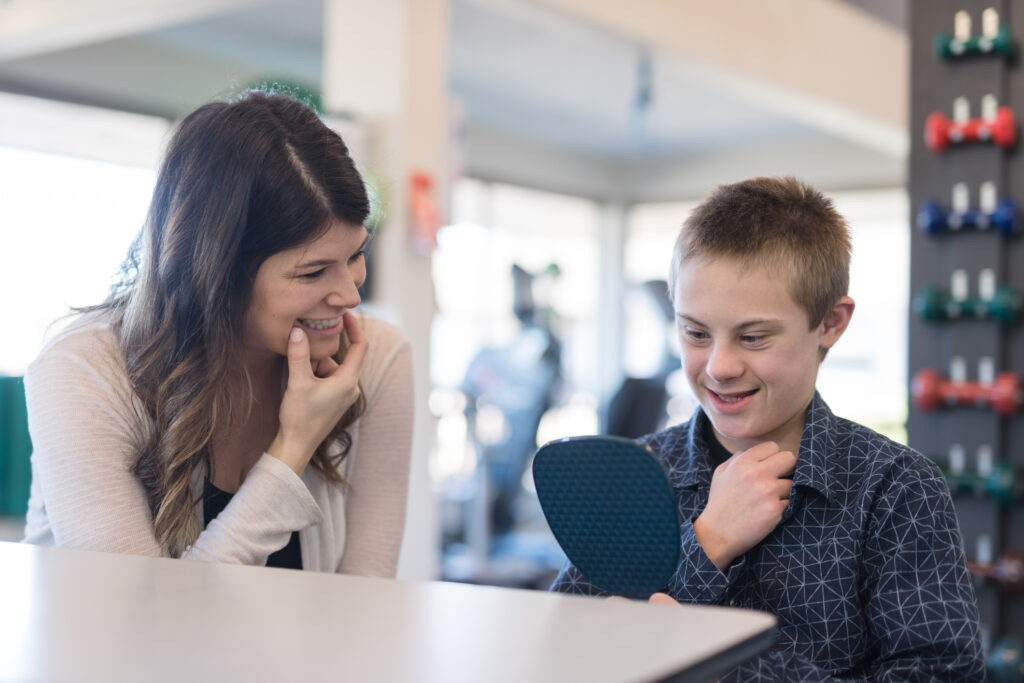
Speech intelligibility refers to how easily a listener can understand what a speaker is saying. When a child has low intelligibility, even familiar listeners like parents or teachers may struggle to understand them.
Delayed speech refers to when a child’s speech development is not aligned with the milestones for their age. While every child develops at their own pace, persistent difficulties with speech clarity or slow speech development can indicate a need for professional support.
Concerned About Your Child’s Speech? Request a Free Phone Consultation
Who Can Benefit from Speech Therapy for Intelligibility & Delayed Speech?
Your child can benefit from speech therapy if they:
- Speak fewer words than expected for their age
- Are difficult to understand, even by family members
- Leave out or substitute sounds when speaking
- Have trouble forming sentences or using grammar correctly
- Get frustrated when trying to speak
- Have been diagnosed with a condition that affects their communication skills (e.g., autism, Down syndrome, etc.)
Find Support for Clearer Speech – Contact Us Today
Our Approach to Speech Intelligibility & Delayed Speech
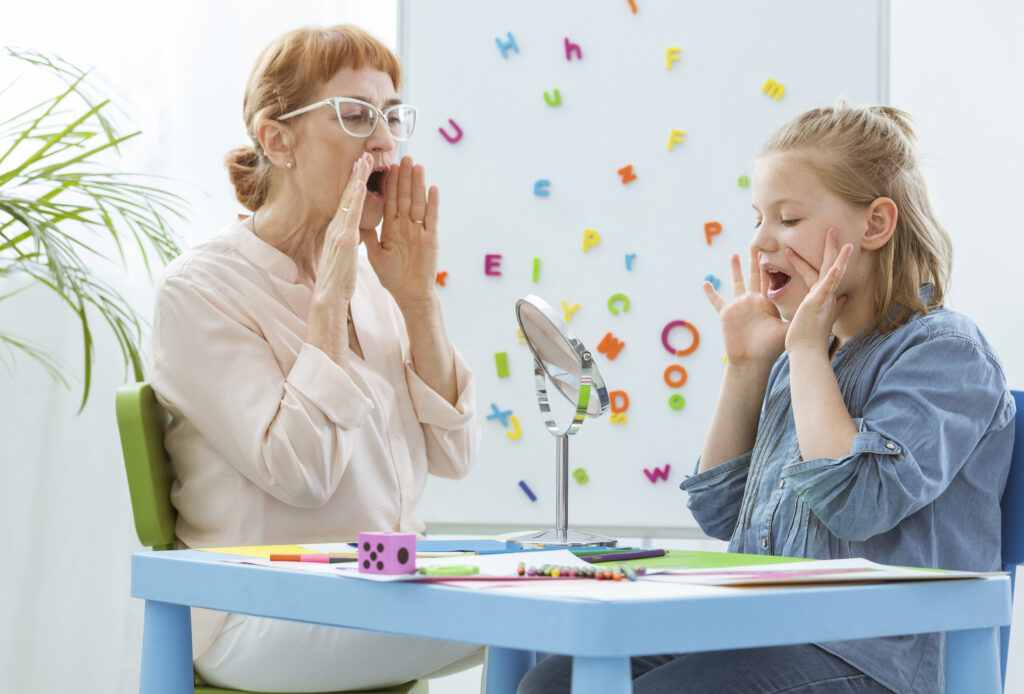
At Peninsula Associates Speech Therapy Services, we take a personalized approach to improving speech clarity and supporting speech milestones. Our clinicians use play-based, engaging techniques that help children feel confident and motivated to practice speaking.
We start with a comprehensive evaluation to understand your child’s unique strengths and challenges. Then, we develop a therapy plan that targets the specific areas affecting their intelligibility, such as speech sound production, oral motor coordination, or language development.

Benefits of Speech Therapy for Intelligibility & Delayed Speech
With support from our experts, your child can make significant progress and gain skills such as:
- Improved clarity of speech
- Increased vocabulary and sentence length
- Greater ease communicating with peers and adults
- Reduced frustration during conversation
- Support for school readiness and classroom participation
- Boosted confidence in social and academic settings
- Early intervention that supports long-term development
Ready for Your Child to Be Understood? Start Speech Therapy Today!
Frequently Asked Questions
When should I be concerned that my child’s speech is hard to understand?
It may be helpful to seek a speech evaluation if your child is difficult for family, friends, teachers, or other listeners to understand (compared to other children their age). Some children may leave out sounds, pronounce words inconsistently, become frustrated when communicating, or have difficulty being understood during everyday conversations.
At Peninsula Associates Speech Therapy Services (PASTS), our speech-language pathologists evaluate speech development, sound production, and overall speech clarity to better understand each child’s communication needs. Early support can help children build clearer speech patterns, improve communication confidence, and strengthen functional communication skills across home, school, and social environments.
What is the difference between delayed speech and reduced speech intelligibility?
A speech delay generally means a child is developing speech skills more slowly than expected for their age. Reduced speech intelligibility refers to how clearly a child’s speech can be understood by others. Some children may have delayed speech development, while others may speak frequently but still be difficult to understand because of speech sound errors or unclear speech patterns.
At PASTS, our speech-language pathologists evaluate both speech development and overall speech clarity to better understand each child’s communication strengths and challenges. This helps guide individualized therapy recommendations that support clearer, more effective communication in everyday situations.
How can speech therapy help children who are not meeting speech milestones?
Speech therapy can help children strengthen the communication skills needed for clearer, more effective speech and language development. Therapy may focus on speech sound production, speech clarity, vocabulary growth, language development, listening skills, communication confidence, and overall functional communication.
At PASTS, therapy sessions are individualized based on each child’s age, developmental level, and communication needs. Our speech-language pathologists use engaging, evidence-based activities designed to support meaningful progress in everyday communication situations. Early intervention and consistent support can help children build skills that support participation at home, in school, and during social interactions.
What can parents do at home to support clearer speech development?
Parents and caregivers can support speech development by creating frequent opportunities for communication during daily routines, play, reading, and conversation. Modeling clear speech, speaking at a comfortable pace, expanding on a child’s words, and encouraging interaction in a positive way can all help support communication growth.
At PASTS, our speech-language pathologists may also provide home practice activities and individualized strategies that fit naturally into everyday life. Consistent support between therapy sessions can help reinforce speech skills and encourage carryover into real-world communication situations while helping children feel confident communicating with others.
At what age should most people be able to understand 100% of my child's speech?
Speech development varies from child to child, but by around 4 years of age, most children should be understood clearly by unfamiliar listeners in most situations. Younger children may still make some speech sound errors as their speech and language skills continue developing, but speech should gradually become easier to understand over time.
If your child’s speech remains difficult to understand beyond what is expected for their age, a speech-language evaluation may help identify whether additional support would be beneficial. At PASTS, our speech-language pathologists provide individualized evaluations and therapy recommendations based on each child’s communication needs and developmental progress.
Reach Out Today to Get Started
If you’re concerned about your child’s speech clarity or developmental milestones, we’re here to help. Contact Peninsula Associates Speech Therapy Services to schedule an evaluation or free phone consultation today.